Dual ovulation stimulation (DuoStim)
One of the most important factors in the success of infertility treatment and the birth of a healthy baby is the number and quality of the obtained eggs and embryos in the IVF program. It is for this reason that in patients with reduced ovarian reserve, we use dual ovulation stimulation (DuoStim), which allows us to obtain more embryos in a short period of time and significantly increases the effectiveness of the IVF program.
Make an appointment
Leave your contact information, our manager will call and advise you
Who is recommended a double stimulation program?
- At AMH level below 1.1 ng/ml
- If the number of antral follicles for this ultrasound is less than 5 in each ovary
- If it is known that in the previous stimulation program 5 or fewer low-quality oocytes were obtained
- In the oocyte preservation program (“Deferred Motherhood”), to preserve a sufficient number of oocytes or embryos for the future
- If ovarian surgery was previously performed, which is an important factor in the premature reduction of ovarian reserve
- Aged over 38
- In women with reduced ovarian reserve due to endometrioid, dermoid ovarian cysts
- For those diagnosed with autoimmune thyroid disease
- If the family is aware of the onset of early menopause on the female line
- Women due to premature decrease of ovarian reserve due to genetic factors
- Before chemotherapy, radiation therapy to preserve oocytes for a short period of time
The dual stimulation method is important for women with a poor response when it is necessary to accumulate a large number of oocytes, and then embryos, in the shortest term to conduct preimplantation genetic testing (PGT-A) and transfer to the uterine cavity euploid (chromosomally healthy embryo).
With the help of a dual stimulation treatment method, a certain kind of accelerated pool system is used, which allows you to get the optimal number of embryos quickly. This is the way to save time. 5 days after the first stage of obtaining the oocytes, ultrasound is performed and preparations for the second stage of obtaining oocytes begin. Stimulation of follicle growth takes place using a protocol similar to the one of the first stage of stimulation. As a rule, the second stage of stimulation is shorter and allows you to get oocytes and embryos in larger quantities. According to this protocol, embryo transfer is carried out in the next menstrual cycle.
Benefits of a dual stimulation program
Emotional health
DuoStim maximizes the opportunity to give birth to a child using one’s own oocytes, thus avoiding the donation of oocytes. Reduces the waiting time and duration of treatment, which mainly takes place within one menstrual cycle.
Economic advantage
The goal of Reprolife is the birth of a healthy baby. A diagnosis of low ovarian reserve usually requires more complex and therefore more expensive therapy. For a more affordable treatment, we developed a double sequential stimulation, reducing a significant portion of the costs that would be required if several standard fertilization programs were conducted.
Efficiency
The DuoStim program has proven its high efficiency. During the second stage of stimulation in women with a low oocyte reserve, it is most often possible to obtain a larger number of high-quality oocytes and embryos. This happens under the influence of the first stage of stimulation, which optimizes the growth of the second cohort of follicles.
More natural embryo transfer
Embryo transfer in the next cycle allows us to use protocols that can improve the ovarian response without worrying whether such stimulation could damage the endometrial receptivity to successful embryo implantation. The transfer is carried out in the next natural cycle or with a special preparation of the endometrium (preparation for cryo transfer of the embryo in the HRT cycle) to optimize receptivity, which increases the effectiveness of getting pregnant.
Reproduction specialists

chief medical officer, leading reproductologist, gynecologist, endocrinologist, MD, PhD. ; main specialty: gynecological endocrinology, treatment of infertility due to premature decline/insufficiency of ovarian function, treatment of embryo implantation disorders.
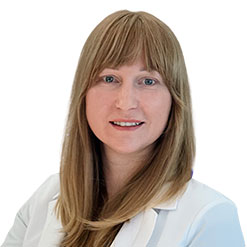
Obstetrician-gynecologist of the highest category, reproductive specialist. Main specialization: gynecological endocrinology — diagnosis and correction of conditions related to PCOS, premenstrual syndrome, ovarian-menstrual cycle disorders, endometriosis, correction of conditions related to different stages of menopause, ovarian cysts. Treatment of all forms of infertility and recurrent pregnancy loss.

Obstetrician-gynecologist, reproductive specialist. Main specialization: gynecology, infertility treatment, endocrine gynecology, pregnancy management (including pregnancy after IVF)

Obstetrician-gynecologist, reproductive specialist, ultrasound diagnostics expert. Main specialization: endocrine gynecology, management of high-risk pregnancies, diagnosis and treatment of all types of infertility, hysteroscopic treatment of uterine diseases
What does the dual stimulation program include?
The double stimulation program with the highest efficiency allows women with a reduced oocyte reserve to achieve pregnancy and give birth to healthy babies.
| Name of service | Cost, UAH |
| Follicle puncture and intravenous anesthesia | 12900 |
| Fertilization of the obtained oocytes by ICSI | 8500 |
| Cultivation of embryos to blastocyst stage | 7500 |
| Freezing of the obtained embryos | 9 700 |
| Storage of frozen embryos for 3 months | 1050 |
| Thawing and embryo transfer into the uterine cavity | 19100 |