Infertility Diagnostics
Make an appointment
Leave your contact information, our manager will call and advise you
Diagnosis before IVF
Center of Reproductive Medicine «Reprolife» in Kyiv conducts diagnostic examination of females and males during planning the conception, as well as complex diagnosis of infertility in couples encountering complicated issues of impregnation and pregnancy carrying. Modern examination methods, doctors with many years of experience, reasonable prices and a comfortable atmosphere are the main reasons why patients choose our medical center.
- Concerning the fact that infertility can relate to a male and female partner respectively, they both are eligible for medical investigation. During planning for pregnancy medical examination is to be performed even in cases when a female partner didn’t have complicating issues impeding the conception, carrying of a pregnancy, and labor.
- The first stage is history taking and investigation.
- Before starting treatment with the help of modern reproductive technologies, the couple should undergo a comprehensive examination.
- There are some peculiarities that may affect the results of investigations, due to this fact, it is advisable to consult a specialist of the clinic.
- The investigation of hormones is tightly fixed by menstrual cycle and the blood samples have to be in accordance with specific days of it. Physical loads and sexual intercourse are to be avoided before the test.
How much an infertility examination costs in Kyiv depends on the selected program. The final cost can be calculated after consultation with a reproductive specialist who issues a referral for diagnostics.
Tests prior to IVF
They are necessary for the most careful selection of the IVF program as well as for determination of contraindications for ART (Assisted Reproductive Technology) and carrying of a pregnancy. In the Rerprolife Clinic, all types of examination and treatment of infertility using IVF methods are carried out.
For females:
On a single occasion
- Blood group and Rh status;
- Investigations of Ig M,G of rubella in the blood;
- When Ig G is positive and IgM is negative the test is taken only once;
- Karyotyping.
Effective Period is 1 month
- Complete blood count;
- Biochemical blood essay (glucose, total bilirubin, GPT, AST, total protein, creatinine);
- Coagulogram (INR, prothrombing time, fibrinogen);
- Clinical Urine Test;
- Urogenital swab microscopy;
Effective Period 3 months
- HIV tests, lues venerea (RW), Hepatitis B and C;
- Genitourinary culture;
- PCR-based diagnostics: Herpes Simplex Virus 1, 2 type; CMV; chlamydia, ureaplasma, micoplasma, trichomoniasis;
Effective Period 6 months
- Hormonal investigations: Anti-Mullerian Hormone, FSH, LH,PRL, estradiol on the 2d-4th day of menstrual cycle; progesterone, estradiol on the 18th -24th day of menstrual cycle;
Effective Period 12 months
- Therapeutic Consequence on patient’s health, the absence of contraindications to ART (Assisted Reproductive Technologies) and carrying of pregnancy, EKG;
- Ultrasonography of the abdominal organs and kidneys;
- Breast ultrasonography (under 35 years of age), in case of pathology detection mammography; after 35 – mammography;
- Thyroid gland ultrasonography;
- Photoroentgenography or chest X-ray examination with the consequence;
- Cytologic screening of the cervical canal and uterine cervix;
- Colposcopic examination;
- Hormonal investigation of thyroid gland: TSH, free T4, thyroid peroxidase antibodies test;
Based on indications to particular case
- Investigation of polymorphism of thrombophilia genes, folate cycle;
- Immunogram;
- Homocystein, 25(OH) vitamin D;
- Hysteroscopy – investigation of the uterine cavity with the optic device – hysteroscope; endometrium biopsy with histochemical study;
*Please, pay attention to the following info!
HIV tests, lues venerea (RW), Hepatitis B and C must be taken only by the specialists of “Reprolife” clinic after verification of your personality by your Passport (ID card)
For male
On a single occasion
- Blood group and Rh status;
- Karyotype;
Effective Period 3 months
- HIV tests, lues venerea (RW), Hepatitis B and C;
- Investigation of urethral swab;
- PCR-based diagnostics: Herpes Simplex Virus 1, 2 type;
chlamydia, ureaplasma, micoplasma, trichomoniasis;
Effective period 6 months
- Spermogram;
- Urologist-andrologist counselling interview (in case of spermogram abnormality);
Effective period 12 months
- photofluorography or chest X-ray examination with the interpretation;
Female infertility causes
Age factor
Fertility in women starts declining at age 35 years with decrease in ovarian reserve and deterioration in oocyte quality;
Endocrine disorders
This disease results in ovulation disorder or the incorrect effect of sex hormones on endometrial preparation for implantation- common reasons why it is not possible to get pregnant. Disorders occur as a result of such diseases:
- polycystic ovary syndrome (PCOS);
- premature exhaustion of the ovarian reserve;
- ovarian resistance syndrome (ovarian tissue does not respond to the command from the pituitary gland to mature the follicle and ovulate);
- hyperandrogenism of adrenal genesis (increased level of adrenal hormones);
- hypothyroidism (decreased production of thyroid hormones);
- hyperprolactinemia (increased prolactin level in the blood);
- pituitary hypogonadism (reduction or absence of pituitary hormones responsible for ovarian function and ovulation);
- metabolic syndrome (overweight, insulin resistance, lipid metabolism disorders).
Fallopian tubes patency disorder
(partial or complete blockage)
Endometriosis
is a disease in which cells similar to those in the endometrium as the layer of tissue that normally covers the inside of the uterus, grow outside of it – on the ovaries, fallopian tubes, abdominale membrane;
Uterine malformation
(congenital malformations; polyps; uterine fibroids that deform the cavity; synechia, adhesions; endometrial damage associated with curettage and damage of the basal layer; changes as a result of postoperative, post partum complications);
Acute, chronic endometritis
endometrial mucosa inflammatory process
Genetic causes
(karyotype disorder). Often, genetic changes in the blood coagulation system, which can affect the implantation process and the gestation.
Immunologic factors
Could result in the development of antisperm antibodies, or excessive activation of the immune system during embryo implantation;
Pelvic inflammatory disease
Lack of ovulation can be caused by polycystic ovary syndrome (PCOS), premature depletion of ovarian reserve, resistant ovary syndrome (while the ovarian tissue does not respond to the command from the pituitary gland to mature the follicle and ovulate), hyperandrogenism of the adrenal genesis (adrenal glands hormones increase),hypothyroidism (a decrease in the production of thyroid hormones), hyperprolactinemia (an increase in the level of prolactin in the blood), pituitary hypogonadism (a decrease or absence of of pituitary hormones responsible for ovarian function, ovulation), metabolic syndrome (excess weight and insulin production to maintain sugar levels)
Endometrial receptivity
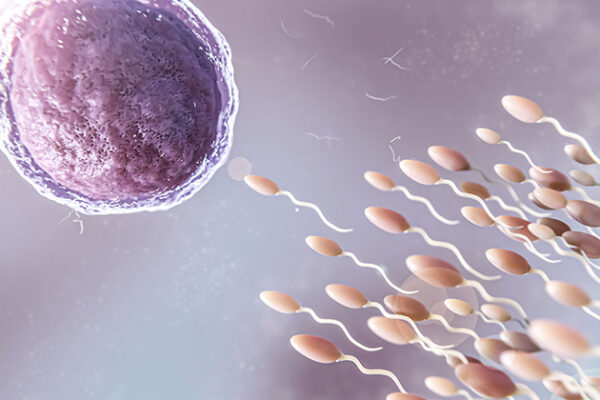
The embryo attaches to the endometrium 6-7 days after fertilization of the egg. The implantation window is the period when the most favorable conditions for an embryo attachment are formed in the endometrium.
The key to successful implantation and effective gestation is a combination of many factors:
- The endometrium should fully correspond to the period of the implantation window: specific receptors and structures necessary for attachment of the embryo should appear in it
- At the time of attachment, the embryo must reach the blastocyst stage.
Pinopodia is an epithelial cellular protrusion that appears on the surface of endometrial cells. The peak of their formation occurs during the period of maximum receptivity – susceptibility of the endometrium, which allows the use of pinopodia as a reliable indicator of the implantation window.
- in the natural cycle lasting 28 days, pinopodia are formed for 20-22 days;
- in the stimulated cycle formed in 18-21 days of the menstrual cycle.

The implantation window may be incomplete – a condition in which the number of endometrial pinopods is insufficient for implantation. Process of pinopodia formation may be affected, and the implantation window may shift in time – appear earlier or later than necessary.
The reasons for such changes may be: hormonal disorders, acute or chronic inflammatory processes, surgical interventions, immunological disorders.
The Reprolife Private Clinic is one of the few in Ukraine where you can undergo infertility tests using the ERA molecular genetic test. It shows the degree of readiness of the endometrium for the implantation process during the period of the implantation window. According to the results of the examination, the correction of the detected violations is prescribed at the stage of preparation for pregnancy, which significantly increases the chances of successful infertility treatment.
Diagnosing male infertility
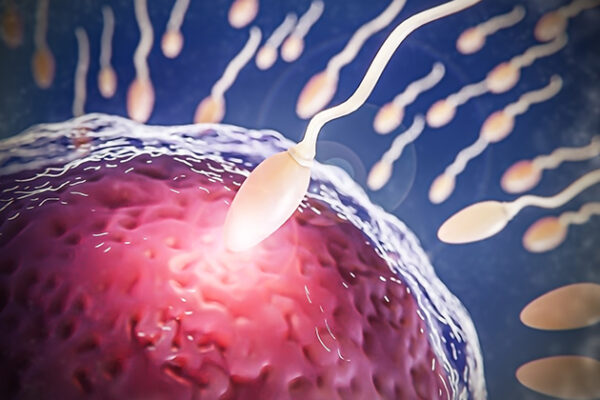
After taking an anamnesis, the following examinations may be required:
- Spermogram. This test makes it possible to assess the quantity, quality, sperm motility, ejaculate volume. Proper preparation prior to this analysis is very important. 3-5 days before the test, sexual restraint is required. It is necessary to exclude saunas, hot baths, alcohol, some medications.Even low-alcohol use can result in a decrease in sperm motility and morphology;
- The Krueger strict sperm test is in-depth assessment of sperm quality, which helps to assess the ability to fertilize an egg;
- MAR test is performed if an immunologic factor of male infertility is suspected.
This screening helps to determine the presence of antisperm antibodies, complex proteins that can attack spermatozoa. This particular disorder can occur due to immune system malfunction, which causes it to perceive its own cells as foreign cells.
- Determination of hormones level. The correct ratio of sex hormones is provided by spermatogenesis (the process of germ cells formation);
- Doppler ultrasound examination. It has great diagnostic value and makes it possible to determine the condition of the genitals and its blood supply;
- Testicular and appendages biopsy (with histological, cytological examination). In case of complete absence of spermatozoa in the ejaculate (azoospermia) makes it possible to detect spermatozoa, with their subsequent use in IVF cycle;
- Genetic testing. Disorder of male genome can lead to abnormal process of formation, maturation, sperm motility problems, resulting in disorders that affect the ability to properly fertilize.
Our specialists

chief medical officer, leading reproductologist, gynecologist, endocrinologist, MD, PhD. ; main specialty: gynecological endocrinology, treatment of infertility due to premature decline/insufficiency of ovarian function, treatment of embryo implantation disorders.


Obstetrician-gynecologist and ultrasound diagnostics specialist. Main specialization: endocrine gynecology, pregnancy management, including after IVF, prenatal diagnostics (Fetal Medical Foundation license).
Obstetrician-gynecologist of the highest category, reproductive specialist. Main specialization: gynecological endocrinology — diagnosis and correction of conditions related to PCOS, premenstrual syndrome, ovarian-menstrual cycle disorders, endometriosis, correction of conditions related to different stages of menopause, ovarian cysts. Treatment of all forms of infertility and recurrent pregnancy loss.

Obstetrician-gynecologist, reproductive specialist. Main specialization: gynecology, infertility treatment, endocrine gynecology, pregnancy management (including pregnancy after IVF)

Obstetrician-gynecologist, reproductive specialist, ultrasound diagnostics expert. Main specialization: endocrine gynecology, management of high-risk pregnancies, diagnosis and treatment of all types of infertility, hysteroscopic treatment of uterine diseases