Infertility treatment with ART
IVF main phases
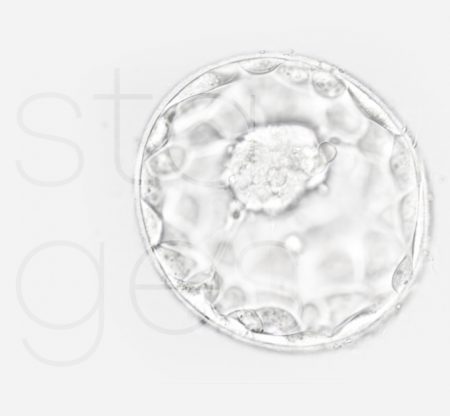
In Vitro Fertilization is one of the most effective and advanced methods applied in overcoming infertility worldwide.
Follicle Growth Stimulation
IVF programme is launched via a course of medically-induced stimulation of the ovulation (superovulation) due to the fact that for the fertilization to be successful it is necessary to receive several mature ovums (oocytes) at a time within one menstrual cycle − optimal number can range from 10 to 20. Stimulation is decided by a reproductologist concerning all individual health issues of a female patient and the results of profound medical examination. To reach the utmost results the medications (honadotropins) are used in certain amounts, normally during 11-12 days, which is accompanied by mandatory ultrasound monitoring of follicles’ growth and (based on indications) investigation of hormones. The growth of the follicles is controlled once in 3-5 days, and upon the leading follicle reaching 14 mm in diametre one more medication is added (GnRH-antagonists) to avoid the premature ovulation and to cause proportional growth.
Finally, when the follicles reach 19-20 mm in diametre an ovulation trigger is administered, the latter launches last stage of ovum’s maturation providing the possibility for their retrieval performed right after 35-36 hours following the moment of injection.
Follicle Puncture
Transvaginal puncture (aspiration) of follicles is conducted to collect the follicle fluid with oocytes under the intravenous pain management (anaesthesia) and lasts for 20-30 minutes. Following, the female patient is carefully supervised for 1.5-2 hours.
While puncture as a part of IVF the follicle liquid is immediately transmitted to embryological laboratory. An embryologist performs the separation of oocytes by rinsing them from follicle liquid, giving prior assessment to their stage of maturation. Afterwards the oocytes are placed into specific environment and added to special incubator till the fertilization procedure is performed. The incubator sustains special conditions corresponding the organism of a mother (namely the environment in her fallopian tubes).
Preparing the Sperm
Upon the oocytes retrieval from a female, a husband donates sperm. At this stage special conditions are mandatory: the number of days of abstaining from 2 to 5, the exclusion of being affected by high temperatures (having hot bath or spending time in sweat bathes). The sperm production process takes 3 months and is vulnerable to harmful factors’ effect. The quality of sperm gets considerably reduced by: effect of alcohol, nicotine, toxic influence of certain medications − sedatives, some of antihypertensive, cytostatic, antiviral; the influence of a dye, lacquer, salts of heavy metals; strong overexertion; presence of acute and chronic conditions.
By planning the treatment the couple has either to exclude the influence of harmful factors or to reduce them to a minimum.
If due to some circumstances the male partner isn’t able to donate the semen fluid for oocytes fertilization in the day of oocytes retrieval, medical centre “ReproLife” applies technology of cryoconservation of the sperm. You can donate sperm to be frozen (remain in cryoconservation) in our clinic with its further preservation for the period requested.
Oocytes fertilization
On this demanding stage an embryologist, in 4 hours following the oocytes retrieval, conducts the classical fertilization (in vitro insemination) or with ICSI (intracytoplasmic sperm injection) which is the injection of a germ cell into ovum’s cytoplasm. In medical centre “ReproLife” ICSI is the most preferable, this allows us to select the best germ cells for fertilization in terms of morphology, accuracy, and quality; to assess the maturity and quality of oocytes, the coat thickness of the ovum, and its disposition towards fertilization.
Embryo transfer into the uterine cavity
For the 3-7 day of embryo development, the embryo transfer of one/two embryos into the uterine cavity is performed with the specifically designed catheter (the procedure is absolutely painless and does not require anaesthesia). In medical center “ReproLife” we perform embryo transfer on blastocyte stage (preimplantation stage of embryo development) hence the fact that the stage offers the highest chances for implantation and proper embryo development.
Embryo transfer is conducted with an application of ultrathin catheter which is absolutely safe for an embryo, supervised by ultrasound sound control on the urinary bladder full. During the procedure both a specialist and a future mom observe the embryo an image of which is translated on the monitor and an embryologist takes a photo capturing the condition of the embryo during an embryo transfer stage. Additionally, the female patient is provided with embryological conclusion on the stages of development of the rest of the embryos.
The rest of the embryos are being verified on blastocyst stage (are being frozen), that makes the planning of the next pregnancy possible, excluding the necessity for hormonal stimulation of ovaries to be repeated. Upon the completion of embryo transfer, a female patient is comforted in the out-patient department for 2 hours.
To support the implantation the fertility specialist prescribes the medications the proper administration of which is strictly regulated by a time frame. HCG Test (approving the pregnancy) is taken on the 14th day after embryo transfer and is discussed with the physician in charge. Based on the tests results the physician can make adjustments to the previously prescribed course. In a week an ultrasound is taken.
The only authentic pregnancy confirmation is the diagnosing of a fetal heartbeat.
Post-embryo transfer recommendations
After embryo transfer you:
- Should exclude any physical loads, overheating (having bath or sweat bath, messages), sexual intercourse.
- Prevent overcooling, contacts with diseased, try to follow maximally correct diet rich in organic food, increase water consumption (2-2.5 litre daily).
- What is more, the exclusively positive mind-set is of greatest importance.
- Try to get rid of all worries and stress.
Why "Reprolife" team should be entrusted with performing IVF
- In 2018 the positive results in getting pregnant with transfer of a single embryo into uterine cavity after PGS (preimplantation genetic screening) equaled 78.6 %. The effectiveness of cryoprotocol embryo transfer equaled 56 %, that is considerably higher if to compare with indicators of successful results ratio demonstrated by other clinics.
- Physicians of our clinic are members of European Society of Human Reproduction and Embryology (ESHRE), American Society of Reproductive Medicine (ASRM), Ukrainian Association of Reproductive Medicine (UARM), constant participants of Controversies in Preconception, Preimplantation and Prenatal Genetic Diagnosis (CoGEN) и the Ovarian Club Meeting (OC).
- We perform the most effective and cutting-edge reproductive technologies: ICSI, PGT-A (NGS), PGT-M, PGT-SR, TESA, etc.
- Fertility program is selected based on personal requirements of every couple, this enables to reach the utmost result in pregnancy.
- Our own embryological laboratory fully meets the requirements of European and American quality standards.
- Our staff is a feather to our cap, this is the team of professionals working for the result − giving birth to healthy babies in every family who refers to us.
- We have our own cryobank of donors’ oocytes and sperm in our disposal, to accomplish the programs with needed or characteristics.
- Medical centre “Reprolife” is popular and enjoys the respect in many foreign countries. We consult and admit patients from the USA, The UK, Czech Republic, Austria, Germany, Greece, Cyprus, Montenegro and other states.
Overcoming female infertility: Steps towards reproductive health
Infertility treatment is becoming increasingly relevant worldwide. Approximately 45% of marriages with infertility in Ukraine are related to impaired women’s reproductive function. On the other side, there is a tendency observed towards the increase of such cases. Female infertility is determined by the absence of getting pregnant within a year of leading regular unprotected sexual life up to 35 years and during the next 6 months following 35 years.
However modern medicine demonstrates high efficiency. Effective treatment methods enable one to undergo the joy of motherhood. In Kyiv, at Reprolife Medical Centre, experienced specialists will develop an individual and the most compelling treatment plan after conducting a thorough diagnosis.
Causes when female infertility emerges
Infertility does not occur by itself but rather comes as a consequence of the changes in the body. Determination of the pregnancy failing to occur requires consulting an experienced reproductive technology specialist. Infertility can be provoked by numerous factors:
- congenital abnormalities of the uterus and appendages as well as acquired alteration (after undergoing some surgical interventions);
- inflammatory diseases; chronic endometritis;
- endocrine system dysfunctions, particularly those of adrenal glands and thyroid gland, changes in hormonal profile with low production of progesterone, which is important for implantation matureness to receive the embryo in the uterine cavity);
- the presence of adhesions in the small pelvis;
- impaired patency of the fallopian tubes;
- premature decrease/depletion of the ovarian reserve;
- polycystic ovaries;
- polyps and uterine myomas;
- genetic diseases;
- endometriosis;
- disorders of the proper endometrium growth (Asherman syndrome);
- ovulation disorders (absence or irregular, rare ovulation);
- genitourinary infections;
- diseases of the cervix etc.
Only an experienced reproductive technology specialist is able to properly determine the cause of the non-occurrence of pregnancy, which will enable the scheduling of an effective treatment plan.
Types and forms of infertility
Depending on the frequency of pregnancy, the possibilities to concept and gestate the following types of female infertility can be distinguished:
- Primary and secondary. The first is diagnosed in women who were previously pregnant.Women diagnosed with “secondary infertility” are those who were previously pregnant, but who experienced difficulties with subsequent attempts to concept. Such situations can result from, for example, previous abortions, gynecological and endocrine diseases (polyps, uterine fibromyomas that can deform the uterine cavity, premature decrease/depletion of the ovarian reserve (oocytes reserve, endometriosis, etc.).
- Relative and absolute. In the first case, pregnancy is possible after treatment or the application of assisted reproductive technologies (ART). In the second case, pregnancy does not occur in the absence of the uterus or other genitals. Such disorders can be congenital and acquired.
The concept of “female infertility” also covers various types and forms that require special attention and approach as far as the processes of diagnosis and treatment are concerned, including:
- Tubal factor infertility; occurs due to obstruction of the fallopian tubes or their absence. It can be either congenital or come as a consequence of the adhesion process. Determination of patency is possible due to the usage of special studies (echomaster salpingography – carried out under the control of ultrasound separately or during hysteroscopy; metrosalpingography – performed under X-ray control. The latter has a number of drawbacks and thus is rarely used in modern reproductology).
- Hormonal; disorders of this nature provoke the absence of ovulation, due to which there is no possibility of conception. A disorder of the endocrine system often leads to the development of formations in the uterus, ovaries or endometrium (insufficient or excessive growth of the endometrium, which may become the reason for the absence of embrio implantation into the uterine cavity).
- Uterine; It is associated with the uterus, particularly with its structure (congenital malformations), neoplasms or diseases. These can be submucosal fibroids, endometrial polyps, etc.
- Premature reduction or depletion of the ovarian reserve (in this case, the supply of oocytes may not correspond to reproductive age and be individually reduced or depleted). It becomes increasingly common in women of reproductive age.
- Endometriosis is the overgrowth of the endometrium outside the uterus.
- Deviations in the number or structure of chromosomes. Genetic causes may affect the ability to get fertilised, to develop/implant embryos.
- Cervical; caused by a violation of the composition of cervical mucus, which can complicate the process of spermatozoa movement.
- Immunological; such infertility is due to the production in the female organism of antibodies to the spermatozoa of the partner. This can complicate the reaching of the oocyte.
- Age; in women of older reproductive age, the quality of oocytes (eggs) and their ability to fertilize and conceive a healthy embryo decreases. The probability of chromosomal disorders of embryos increases.
- Mixed; difficulties with conception can be provoked by several factors simultaneously.
There are not always the reasons for that. In this case, the infertility of an incomprehensible genesis is discussed. Due to the modern rapid pace of development of reproductive technologies – this form is already rare.
Symptoms of infertility in women
There are no obvious clinical manifestations of this condition. It is difficult to recognize it on your own. But, by analyzing the causes of difficulties with conception, the reproductive technology specialist can identify indirect signs associated with certain disorders. Among them:
- excessive weight or, conversely, insufficient body weight;
- menstrual cycle disorders associated with such characteristics as duration, profusion and regularity;
- acne, oiliness of hair, increased male-type hair (above the upper lip, in the armpits, on the pubis) – may indicate a hormonal imbalance (often an increase in testosterone in the female organism);
- pain and masses in the pelvic area;
- immaturity of the mammary glands, transparent or milk discharge from the breast.
To determine how to treat infertility in women, reproductologists carefully analyze clinical data.
Our specialists

chief medical officer, leading reproductologist, gynecologist, endocrinologist, MD, PhD. ; main specialty: gynecological endocrinology, treatment of infertility due to premature decline/insufficiency of ovarian function, treatment of embryo implantation disorders.
Obstetrician-gynecologist and ultrasound diagnostics specialist. Main specialization: endocrine gynecology, pregnancy management, including after IVF, prenatal diagnostics (Fetal Medical Foundation license).

Obstetrician-gynecologist of the highest category, reproductive specialist. Main specialization: gynecological endocrinology — diagnosis and correction of conditions related to PCOS, premenstrual syndrome, ovarian-menstrual cycle disorders, endometriosis, correction of conditions related to different stages of menopause, ovarian cysts. Treatment of all forms of infertility and recurrent pregnancy loss.

Obstetrician-gynecologist, reproductive specialist. Main specialization: gynecology, infertility treatment, endocrine gynecology, pregnancy management (including pregnancy after IVF)
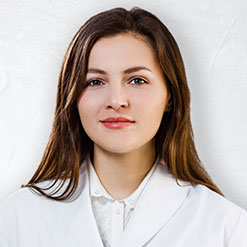
Obstetrician-gynecologist, reproductive specialist, ultrasound diagnostics expert. Main specialization: endocrine gynecology, management of high-risk pregnancies, diagnosis and treatment of all types of infertility, hysteroscopic treatment of uterine diseases