In vitro fertilization (IVF)
IVF in the reproductive center Reprolife: the path to happy parenthood with professionals
In vitro fertilization (IVF) is a modern and one of the most effective ways to treat female and male infertility, which belongs to the group of assisted reproductive technologies (ART). IVF gives high performance in achieving happy parenthood in many cases when conception of a child is complicated or impossible. The program is technically complex, so it requires the professionalism of a reproductologist- embryologist as well as innovative equipment is needed. All these conditions are met in the clinic of reproduction Reprolife. We have helped many couples from Kyiv and other cities of Ukraine, as well as around the world to become happy parents
What is in vitro fertilization?
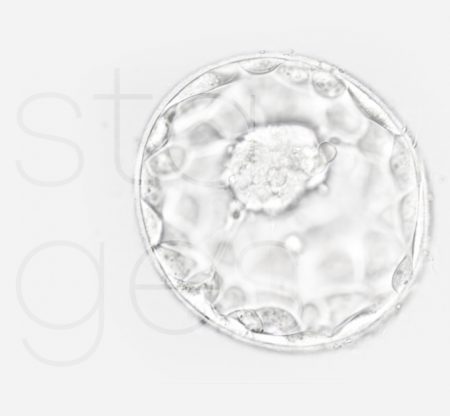
In vitro means fertilization outside the body of the future mother. From Latin extra means outward and corpus means body. Various stages are included, one of these is the fertilization of eggs by sperm in the conditions of an embryological laboratory. Then the embryos develop in specially created conditions – Time-Lapse incubator (in which all conditions identical to those in the fallopian tubes of the future mother are reproduced). Only a few days later, the reproductive specialist transfers the embryo to the uterine cavity of the woman (on the 5-7th day of its development – at the blastocyst stage). Thanks to this technique, you can overcome many factors that cause infertility. But even under the most favorable conditions there is no 100% guarantee of pregnancy.
Indications for IVF
IVF can help to experience the joy of parenthood in different cases when a diagnosis of infertility is made. Indications for its implementation:
- absence or complete obstruction of the fallopian tubes, in which fertilization of the egg normally occurs;
- violation of ovulation – it may not occur at all or rarely occur, because of which the probability of the sperm meeting the egg is minimal;
- endometriosis – overgrowth of the endometrium (mucous cavity of the uterus is outside it);
- premature decrease in the ovarian reserve (decrease in the reserve/storage of oocyte), in which the probability of correct fertilization in a natural way sharply decreases;
- fertilization in the ‘Deferred Motherhood’ program if the oocytes of a woman were obtained at a younger reproductive age in order to be able to fertilize and give birth to children at an older age;
- in some chromosomal disorders or carriage of monogenic diseases in the family, in order to avoid the possibility of transmitting such a disease to their children;
- when fertilizing the oocytes that were preserved before surgical treatment on the ovaries, chemotherapy, radiation therapy in order to preserve the possibility of having children in the future;
- low quality of sperm in a man – a small amount of sperm, their low mobility, a pronounced change in the quality of the sperm, during which it is impossible to achieve proper fertilization naturally;
- lack of erection and ejaculation in a man;
- infertility of an unclear genesis – when the causes of difficulties with conception are unknown.
If a man or woman is a carrier of genetic disorders (monogenic diseases – cystic fibrosis, spinal muscular atrophy, phenylketonuria and many others), during IVF, you can undergo preimplantation genetic testing of embryos (PGT-M). This eliminates the risk of transmission of monogenic disease to the child.
Contraindications to IVF
The technique may be applied in any case. To relative contraindications bellong the following factors:
- inflammatory diseases;
- benign formations of the reproductive system;
- exacerbation of chronic diseases;
- acute infectious diseases – syphilis, tuberculosis, etc.;
- age processes and physiological ovarian exhaustion.
There are also absolute contraindications that make artificial insemination impossible. These include mental disorders of the patient that cannot be treated, malignant formations, HIV infection, and hepatitis. If a woman does not have a uterus or pregnancy can pose a great threat to her health, she can choose IVF with surrogacy.
Preparation for IVF
At the first appointment, the reproductive specialist takes a medical history of a patient asking about their lifestyle and health. First of all, the reproductologist will make an inquiry about the regularity of menstrual function, previous inflammatory diseases, operations on the pelvic organs, the number of abortions, pregnancies, miscarriages, etc.
According to the results of the consultation, the reproductive specialist prescribes a comprehensive examination for men and women. The process also takes into account the ovarian reserve (oocytes’ supply), the reproductive age of the couple and their individual characteristics. If a disease and cause are identified, the reproductive specialist will prescribe the treatment. If the cause of non-occurrence of pregnancy is amiable to correction and treatment, we achieve the natural conception. There are situations when the only way to achieve pregnancy is to conduct an IVF program.
Necessary tests
To assess the health and condition of the reproductive system, various studies are carried out. For a woman, the reproductive specialist prescribes the following tests:
- blood type and Rh factor are important for preventing the possibility of developing Rh conflict and group incompatibility during pregnancy;
- determining the ovarian reserve (oocyte reserve, which is individual for each woman and may not correspond to reproductive age). To do this, it is necessary to determine the blood level of FSH, LH, AMH during the period from the 2nd to 4th day of a menstrual cycle;
- hormonal screening – determining the level of female sex hormones to assess the function of the reproductive system: prolactin (PRL), (the level of progesterone and estradiol – the 18-24th day of the menstrual cycle), the state of the thyroid gland (TSH, St. T4, ATPO, ATTG);
- determination of key indicators in the blood that affect the quality of oocytes and the correct development of the embryo (ferritin, homocysteine, ionized calcium, 25 (OH) vit. E);
- Ultrasound of the pelvic organs to determine the condition of the ovaries, the number of antral follicles, ovulation, the state of the uterus and endometrium for the possibility of attachment and gestation of the baby;
- general clinical tests of urine and blood – allow you to assess the general state of health and identify possible violations.
- coagulogram – blood clotting test;
glucose and biochemical blood test – allow you to identify metabolic disorders and the condition of the liver, kidneys;
- studies on antibodies to TORCH Ig M, G infections – rubella, toxoplasmosis, chlamydia, herpes, cytomegalovirus, etc.;
- tests for infections in the blood – syphilis (RW), hepatitis B and C (HBsAg, HCV), HIV;
- karyotype (determination of chromosome folds);
- PAP test – to determine the risk of cervical cancer;
- PCR for 7 STIs (to exclude sexually transmitted infections);
- smear for microscopy of urogenital secretions allows to identify possible inflammatory processes;
- electrocardiogram (ECG) – to assess the work of the cardiovascular system of the future mother;
- Ultrasound of the mammary glands, thyroid gland, abdominal organs, kidneys;
- fluorography;
- in some cases, hysteroscopy may be required – an endoscopic method for assessing the condition of the uterine cavity; this method is also used to remove polyps, submucosal fibromyomas, synechiae (adhesions in the uterine cavity), intrauterine septa. Endometrial biopsy to exclude chronic endometritis for successful embryo attachment and pregnancy.
Based on the results of the examination, Reprolife reproductologyst draws a conclusion on the treatment program and the subsequent gestation.
Men are prescribed the following tests:
- spermogram – assessment of the quality and quantity of sperm;
- blood type and Rh factor;
- karyotype (set of chromosomes);
- screening the infections in the blood (syphilis (RW), hepatitis B and C (HBsAg, HCV), HIV);
- x-ray;
It is important to take into account the timing of the relevance of the tests when planning the examination and following the recommendations of the doctors. After receiving the results, the therapist provides a conclusion about the possibility or need to correct the state of health of a woman for successful planning and bearing a child. In some cases, tests may be needed.
IVF in "Reprolife" clinic
Reprolife clinic employs highly qualified reproductive specialists, andrologists, embryologists, as well as modern and most effective reproductive technologies. During IVF, all the actions of our reproductologists aim at achieving maximum chances for successful conception and healthy development of the fetus. Stages of IVF in our medical center:
- Stimulation of follicle growth. The duration of such stimulation takes 11-12 days in everage. For this hormonal drugs (gonadotropins) are used. The goal of the stage is to obtain several mature and high-quality eggs within the same menstrual cycle. Follicle growth is controlled using ultrasound (folliculometry) and hormonal studies.
- Puncture of follicles. Total lasts 10-20 minutes. Transvaginal aspiration allows obtaining follicular fluid with oocytes. It is carried out with the use of intravenous anesthesia (sedation). The biomaterial is transferred to an embryological laboratory, where the embryologist separates the oocytes and places them in a special environment. After 40-60 minutes after the puncture, our patient can leave the clinic;
- Preparation of sperm. The conditions for delivery are: abstinence from sex for 2-5 days, avoidance of exposure to elevated temperatures (saunas, hot baths), excluding alcohol consumption. If it is not possible to donate sperm on the day of fertilization, Reprolife can use the sperm from cryopreservation technologies.
- Fertilization of oocytes. The embryologist can carry the procedure according to the classical method (insemination in vitro) or using ICSI (injection of the sperm into the oocyte cytoplasm). At Reprolife, we use the ICSI technique most often, this allows the embryologist to choose the sperm of the highest quality for fertilization, and to assess the maturity of oocytes.
- Transfer of the embryo into the uterine cavity. It is carried out on day 5-7 of its development with the help of an ultra-thin catheter. The remaining embryos at the blastocyst stage are vitrified (frozen), which allows the couple to plan pregnancy in the future.
- Conducting PGT-A (preimplantation genetic testing) to exclude chromosomal disorders in the embryo (aneuploidy) and the possibility of transferring the euploid (chromosomally healthy) embryo. If the reproductive age of a woman is over 35 years old, men are over 40 years old, if in the past there were unsuccessful attempts to transfer embryos, abortion, with a pronounced decrease in the quality (morphology) in the spermogram, we recommend PGT-A. In this case, embryos are cultured to the blastocyst stage, a biopsy is performed in order to conduct preimplantation genetic testing of embryos and they undergo freezing (vitrification). After receiving the results of genetic testing and confirmation of a chromosomally healthy embryo, we begin to prepare the female body for the cryopathing of the embryo and the bearing of the baby. The rest of chromosomally healthy embryos are stored for the possibility of planning pregnancy in the future, without resorting to re-stimulation of follicle growth.
To confirm pregnancy, a blood test for hCG is performed 14 days after the transfer of the embryo into the uterine cavity and ultrasound to visualize the fetal egg.
How should a woman after IVF behave
The reproductive specialist will prescribe drugs to support embryo implantation. It is important to strictly follow the rules of their intake. It is also important to follow these recommendations:
- exclude physical activity and overheating;
- abandon intimacy;
- avoid hypothermia and contact with ill-people;
- eat natural products; balance the diet;
- stick to the drinking regime.
It is also necessary to try to maintain a positive emotional mood and faith. Avoid stressful situations and worries.
Efficacy of IVF
Our medical center is proud of successful results in the field of in vitro fertilization. In 2018, during the PGT (preimplantation genetic testing), the onset of clinical pregnancy after the transfer of one euploid (chromosomally healthy) embryo into the uterine cavity reached 78.6%. These figures significantly exceed the achievements of other clinics of reproductology. Due to the efficiency and affordable cost, our services are used by patients from other countries, in particular the USA, Britain, the Czech Republic, Austria, Germany, etc.
It should be understood that the frequency of pregnancy with the use of IVF depends on the reproductive age of patients and the technique of fertilization, the experience and professionalism of the reproductive team, embryologist and andrologist. The effectiveness of the IVF program is influenced by the quality and expertise of the use of technologies and equipment.
In vitro fertilization programs
In addition to the classic IVF in a stimulated cycle, Reprolife uses other programs:
- IVF in the natural cycle (NC). It is carried out without stimulation of follicle growth (without stimulation of superovulation). Involves the receipt of one egg, the maturation of which is controlled by ultrasound monitoring (folliculometry). The program has an affordable price, because it does not require the use of drugs for the growth of several follicles at once. On the other hand, it is more complicated to predict its outcome.
- IVF with donor eggs, embryos or sperm. Enables the birth of a child to those who have faced difficulties associated with their own (oocytes or sperm). Such programs are carried out with genetic or chromosomal disorders, in the complete absence of one’s own oocytes or sperm or the absence of a partner to fertilize the oocytes.
- Deferred motherhood program. Designed for those who want to preserve their ability to give birth to children in the future. Freezing eggs or embryos allows women to postpone their motherhood until the best time.
Each of the IVF programs in the Reprolife artificial insemination clinic is a unique path to pregnancy and the birth of healthy children in families. Our specialists are ready to provide personalized treatment that allows one to achieve maximum efficiency in each situation.
OUR SPECIALISTS

chief medical officer, leading reproductologist, gynecologist, endocrinologist, MD, PhD. ; main specialty: gynecological endocrinology, treatment of infertility due to premature decline/insufficiency of ovarian function, treatment of embryo implantation disorders.
Obstetrician-gynecologist of the highest category, reproductive specialist. Main specialization: gynecological endocrinology — diagnosis and correction of conditions related to PCOS, premenstrual syndrome, ovarian-menstrual cycle disorders, endometriosis, correction of conditions related to different stages of menopause, ovarian cysts. Treatment of all forms of infertility and recurrent pregnancy loss.

Obstetrician-gynecologist, reproductive specialist. Main specialization: gynecology, infertility treatment, endocrine gynecology, pregnancy management (including pregnancy after IVF)

Obstetrician-gynecologist, reproductive specialist, ultrasound diagnostics expert. Main specialization: endocrine gynecology, management of high-risk pregnancies, diagnosis and treatment of all types of infertility, hysteroscopic treatment of uterine diseases