Surrogacy
Surrogacy
Every year in the world about 1 million women undergo infertility treatment using IVF and surrogacy.
Using this program, a married couple can become parents of a genetically native child, in situations where the onset of pregnancy in spouses is impossible or some contraindications to carrying pregnancy and childbirth are present.
What are the indications for surrogacy:
- absence of the uterus (congenital or acquired);
- deformation of the cavity or cervix (congenital with anomalies of development or after surgical interventions, benign tumors which make carrying pregnancy impossible);
- changes in the endometrium (inner lining of the uterus), in which the attachment of the embryo is difficult (Asherman syndrome, atrophic endometritis);
- diseases in which pregnancy and childbirth pose a threat to the health or life of a woman;
- unsuccessful IVF attempts.
A prerequisite for a surrogacy program is genetic kinship of the child with one or both parents. But a surrogate mother should not have a direct genetic connection with the child. However, pregnancy is allowed to be carried by a close relative of future parents (it can be a mother, sister, and so on).
It is important to know that a surrogate mother during pregnancy does not transmit daily genetic information to the child. All genes are laid at the stage of fertilization of the oocyte by the spermatozoid. Therefore, the baby will receive genes only from biological parents.
Stages of surrogacy program
The surrogacy program consists of several stages:
Selection of a surrogate mother. For the role of surrogate mother can apply: an adult, mentally healthy, capable woman without bad habits and medical contraindications to carrying a pregnancy. Moreover, in Ukraine, a prerequisite is the presence of a healthy own child (children).
IVF program in a biological mother or donor of oocytes (ovarian stimulation, obtaining oocytes, their fertilization, embryo cultivation, preimplantation genetic testing or PGT).
IVF program in a biological mother or donor of oocytes (ovarian stimulation, obtaining of the oocytes, their fertilization, embryo cultivation, preimplantation genetic testing or PGT).
Embryotransfer. After receiving a good quality embryo, it is transferred to the surrogate mother, after careful preparation of the endometrium and excluding ovulation.
Confirmation of pregnancy and further support of pregnancy till the birth of a healthy baby.
Birth of a baby. The time and method of delivery is selected in accordance with the individual situation. After birth, the child is transferred to biological parents, who draw up all the necessary documents confirming their paternity.
Our specialists

chief medical officer, leading reproductologist, gynecologist, endocrinologist, MD, PhD. ; main specialty: gynecological endocrinology, treatment of infertility due to premature decline/insufficiency of ovarian function, treatment of embryo implantation disorders.
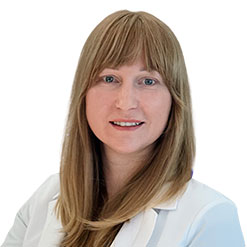
Obstetrician-gynecologist of the highest category, reproductive specialist. Main specialization: gynecological endocrinology — diagnosis and correction of conditions related to PCOS, premenstrual syndrome, ovarian-menstrual cycle disorders, endometriosis, correction of conditions related to different stages of menopause, ovarian cysts. Treatment of all forms of infertility and recurrent pregnancy loss.

Obstetrician-gynecologist, reproductive specialist. Main specialization: gynecology, infertility treatment, endocrine gynecology, pregnancy management (including pregnancy after IVF)

Obstetrician-gynecologist, reproductive specialist, ultrasound diagnostics expert. Main specialization: endocrine gynecology, management of high-risk pregnancies, diagnosis and treatment of all types of infertility, hysteroscopic treatment of uterine diseases