
Table of contents
Every week, there are patients who have been trying to cope with excess weight for a long time. For someone, a fundamental surplus can be 5-6 kg with a normal BMI, others struggle with excess weight almost all their lives with variable success and have a certain number of concomitant health disorders. We will talk about them further.
MAIN CAUSES OF OBESITY AND FACTORS THAT COMPLICATE WEIGHT LOSS.
To begin with, I will remind you what exactly is excess weight, and what is considered obesity.Body mass index (BMI)=weight (kg)/height² (cm) Normal BMI=18-25
Overweight is when BMI is greater than 25 but less than 30.*If BMI is within 27-30, but there are negative health consequences or metabolic syndrome (insulin resistance or diabetes, hypertension and other cardiovascular diseases, increased cholesterol and LDL, gallstone disease, gout, apnea syndrome ), this condition is already equated with obesity and is considered a complicated condition that requires appropriate treatment.
Obesity of the first degree:
- BMI=30-34.9
- II degree: BMI=35-39.9
- III degree: BMI≥40
According to modern research, the main causes of obesity and factors that contribute to weight gain can be divided into 6 categories:
- Way of life.- Unhealthy food and diet, repeated weight loss and gain (yo-yo dieting)- Sedentary, sedentary lifestyle- Sleep disorders, chronic lack of sleep (shift work)- Obstructive sleep apnea syndrome (OSAS)- Alcohol, smoking- Cultural or socio-economic factors
- Psychological state.- Depression- Chronic stress- Psychological injuries- Eating disorders (bulimia)
- Taking some medicines.- Corticosteroid drugs- Antihypertensive drugs (α/β-blockers)- Taking antidepressants (mirtazapine, citalopram, paroxetine)- Antipsychotic drugs (olanzapine, lithium, risperidone)- Painkillers (pregabalin, amitriptyline)- Antidiabetic (glimepiride, insulin)
- Hormonal disorders.- Hypothyroidism- PCOS- Hypogonadism- Adrenal hyperandrogenism- Menopause 5. Dysfunction of the hypothalamus (rare)- After radiotherapy, trauma, surgery or tumor damage- Craniopharyngioma- Arteriovenous malformation 6. Monogenic syndromes (rare ones)- Congenital leptin deficiency or leptin receptor deficiency- Genetic disorders (Prader-Willi, Bardet-Bidl syndromes, others)
WHY IS OBESITY CONSIDERED A CHRONIC DISEASE?
A chronic disease is a condition that requires long-term treatment and can usually be controlled but not cured. For decades, medical societies have advocated that obesity is a disease. Ultimately, the recognition of obesity as a chronic disease led to the creation of certain recommendations for its treatment, which are based on a step-by-step approach followed by long-term support for long-term behavioral changes
In modern medical practice, which is based on evidence-based methods, there are 3 pillars of obesity treatment: – Psychological intervention – lifestyle change (healthy diet, regular exercise, sleep management, increasing stress resistance, working with a psychologist)- Medical treatment of obesity (pharmacological therapy) – for patients with BMI≥30 or BMI≥27 in the presence of obesity-related complications- Bariatric surgery (bariatric surgery) in combination with lifestyle changes
Excess or dysfunction of adipose tissue is always inflammation, which contributes to numerous disorders in the body. Obesity is associated with heart failure, stroke and other cardiovascular diseases, diabetes, anxiety and depression, complications during pregnancy, infertility and unsuccessful IVF (in vitro fertilization) attempts, severe infectious diseases (including COVID-19) and some types of cancer
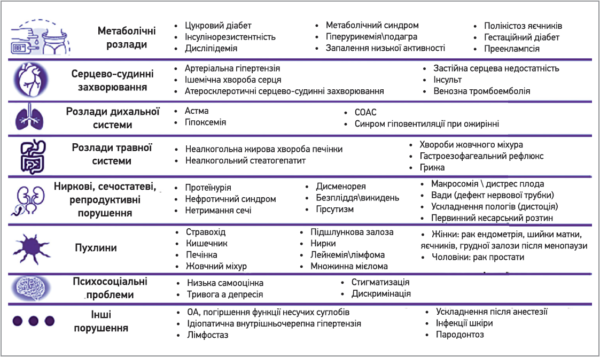
Weight loss of even 5% has shown significant benefits in improving and/or preventing many obesity-related diseases.
Although lifestyle changes (diet/physical activity) are the foundation of successful weight management, these changes alone often do not provide sustained weight loss. A large body of evidence shows that lifestyle changes alone typically achieve about 3-5% weight loss, which is not sustained long-term in most people.
Therefore, according to obesity treatment guidelines, a comprehensive approach to solving the problem of weight loss should include appropriate long-term drug treatment, especially in patients with repeated unsuccessful weight loss attempts.
MEDICATION TREATMENT OF OBESITY.
Medical treatment of obesity is usually considered for patients with BMI ≥ 30 kg/m2 or BMI ≥ 27 kg/m2 with weight-related complications. When choosing a drug, not only its mechanism of action, effectiveness and possible side effects are taken into account, but also the individual preferences of each patient, attitude towards the result, concomitant diseases, cost and availability of drugs.
Important note! Weight loss medications are intended to be used in conjunction with diet, exercise, and behavior changes, not instead of them.
The last decade has brought into clinical practice new modern drugs for weight reduction, which show high efficiency with relatively minor side effects with long-term use.
The mechanism of action of these drugs is based on the regulation of receptors that control appetite.
It has been established that in the development of obesity, the violation of the feeling of satiety and the perception of the signal about nutrition in the areas of the brain involved in energy consumption, namely in the hypothalamus, are of fundamental importance.
In response to food intake, endocrine cells of the intestine secrete their own hormones, the main of which are GLP-1 (Glucagon-like Peptide-1) and GIP (Gastric Inhibitory Polypeptide). They regulate insulin secretion by beta cells and inhibit glucagon secretion from pancreatic alpha cells when blood sugar levels rise.
Normally, through GLP-1 and GIP receptors in the central nervous system (brain), a signal about satiety arrives. In response to such a signal, the feeling of hunger decreases, appetite decreases, food intake and replenishment of energy reserves stops. When this mechanism is disturbed, eating disorders occur, which contribute to weight gain.
In clinical trials, the highest and most stable weight loss effectiveness was shown by drugs aimed at regulating the work of these receptors. These drugs are called agonists because they enhance the work of GLP-1 and GIP receptors in the CNS. As a result of their action, gastric emptying is slowed down, appetite decreases, control over food intake and food cravings improves, which has a beneficial effect on maintaining weight loss.
The most common side effects of GLP-1 agonists include nausea, vomiting, and diarrhea, which can lead to acute kidney injury due to liquid volume depletion. Dizziness, mild tachycardia (rapid heartbeat), exacerbation of chronic infections, headaches, and dyspepsia (indigestion) may also occur.
However, these effects, as a rule, are temporary in nature and can be significantly mitigated by diet modification, careful eating in small portions, and a gradual, slow increase in the dose of the drug under the supervision of a doctor. Good eating advice is to chew slowly and stop eating when you start to feel full. Medical treatment with GLP-1 and GIP receptor agonists is indicated as an adjunct to lifestyle intervention to achieve and maintain long-term weight loss.
When the goal is reached, the medication can be stopped, but studies show that in most cases, especially with a high baseline BMI, there is a recovery of weight with a tendency towards baseline. Therefore, medical treatment of obesity is considered as part of a long-term treatment strategy.
Thus, obesity, like any chronic disease, requires constant monitoring and long-term treatment. The modern approach is that, in addition to mandatory lifestyle changes and psychological support for patients, it is necessary to ensure the timely connection of effective complex medical treatment, which increases the chances of success and helps to achieve the goal in a shorter period of time. Teamwork with an experienced endocrinologist, a comprehensive approach to supporting endocrine health and optimizing hormone levels provides a long-lasting and effective result.