Treatment of female infertility
Treatment of female infertility
Infertility in women is more and more common nowadays, it is influenced by a later age in planning children, ecology, stress, previous infections, and endocrine disorders. The Reprolife clinic helps women quickly and accurately find the causes of difficulties with pregnancy and accompanies women at all stages of long-awaited motherhood until the birth of a child. A decrease in reproductive function is possible at any age, but it is more common in women over 35 years of age. Fortunately, most cases of fertility disorders are treatable.
The Reprolife private clinic in Kyiv uses modern reproductive medicine methods that help women overcome infertility. Many years of experience of doctors, the latest technologies, and individual treatment regimens are the key to successful results: 95% of our patients become pregnant after completing a course of treatment.
Causes of female infertility
The female reproductive system is a complex mechanism that includes reproductive and endocrine organs. Its activity is regulated by nervous structures, the immune system, hormones, and other bioactive substances. An imbalance in any link of this system threatens fertility disorders.
The main causes of female infertility:
- Anovulatory cycles observed in diseases of the endocrine system (ovaries, adrenal glands, pituitary gland and hypothalamus, thyroid gland).
- Premature reduction of the ovarian reserve (stock of eggs), which does not correspond to the woman’s reproductive age.
- Late reproductive age – from the age of 35, the number and quality of eggs in the female body decreases, which increases the risks of chromosomal disorders of embryos, making it difficult to conceive a chromosomally healthy embryo.
- Gynecological diseases: endometriosis (growth of the endometrium outside the uterine cavity), chronic endometritis (inflammatory process of the uterine cavity), oophoritis (inflammation of the ovaries), hydrosalpinx (accumulation of inflammatory fluid in the lumen of the fallopian tubes), fibroids (leiomyomas) of the uterus, endometrial hyperplasia (excessive growth mucous membrane of the uterine cavity, its thickening) and endometrial polyps, polycystic ovary syndrome (PCOS).
- Obstruction of the fallopian tubes, which occurs as a result of chronic salpingitis, cicatricial changes, adhesion disease.
- Congenital defects of the uterus: atresia, doubling, saddle-shaped or bicornuate shape, the presence of an intrauterine membrane, retroflexion.
- Genetic, chromosomal syndromes: Shereshevsky-Turner (karyotype 45 X0), Martin-Bell, Kallman.
- Acquired changes in the anatomy of the genitals, caused by pelvic injuries, surgical interventions.
- Toxic effects of radiation therapy, chemotherapy, occupational hazards, alcoholism, and long-term smoking.
The risk of fertility disorders increases in women with accompanying autoimmune diseases, chronic diseases of internal organs. Psychological factors are also involved in the development of infertility. Frequent stress, fatigue, increased anxiety, fears related to pregnancy and motherhood reduce the chances of successful conception.
Symptoms of female infertility
Often, the absence of pregnancy is the only complaint with which the patient addresses the doctor. Accompanying signs of infertility in a woman are caused by diseases that caused a decrease in fertility. The most common symptoms are:
- irregular and scanty menstrual bleeding;
- absence of menstruation for several months;
- chronic lower abdominal pain;
- painful sexual intercourse;
- excessive hair growth according to the male type;
- increased activity of the sebaceous glands of the skin and acne;
- unreasonable gain of excess weight.
If the disease is caused by birth defects or genetic disorders, doctors identify signs of infertility in teenage girls. Symptoms include primary amenorrhea (absence of menstruation), underdevelopment of the external and internal genitals, and delayed puberty.
Classification of female infertility
Depending on the reasons why women cannot get pregnant, the following types of infertility are distinguished:
- Endocrine is the most common option, manifested by menstrual cycle and ovulation disorders due to hormonal imbalance.
- Tubal and tubo-peritoneal — the difficult advancement of germ cells through the fallopian tubes, which occurs in primary or secondary anatomical changes
- Uterine – diseases of the uterus that disrupt the process of spermatozoa advancement and/or prevent the attachment of the embryo after conception.
- Immunological — the presence of antisperm antibodies that block the advancement of spermatozoa and prevent their fusion with the egg cell.
- Idiopathic – absence of pregnancy for no apparent reason.
According to the features of occurrence, there are primary and secondary infertility forms. The primary form is diagnosed in women who have never been pregnant in their lives. The secondary form is determined in patients with one or more pregnancies in the anamnesis, regardless of their duration and success. According to the degree of severity, infertility is relative and absolute.
Methods of diagnosing female infertility
At the initial consultation, the doctor evaluates the woman’s complaints and her obstetric history, determines the signs of infertility, conducts a gynecological examination – bimanual examination and examination of the vagina using mirrors. Next, a comprehensive examination program is prescribed:
- clinical blood analysis, determination of blood group and Rh factor;
- microscopy of a swab from the vagina and cervical canal;
- research on the main types of STDs: gonorrhea, chlamydia, mycoplasmosis, ureaplasmosis, trichomoniasis;
- liquid cervical cytology (PAP test);
- tests to determine the level of hormones in the blood: on day 2-4 of the menstrual cycle: FSH (follicle-stimulating hormone), LH (luteinizing hormone), AMH (anti-Mullerian hormone), PRL (prolactin); on days 18-21-24 of the menstrual cycle: progesterone, estradiol; regardless of the phase of the menstrual cycle: the level of the index of free testosterone, thyroid-stimulating hormone (TSH), free thyroxine (free T4), DHEA-c, homocysteine, 25 (0H) vitamin D is determined;
- evaluation of the ovarian reserve (based on the calculation of the number of antral follicles and the volume of the ovaries during ultrasound of the pelvic organs, the level of AMH and FSH) – in order to determine the individual reserve of eggs;
- determination of the karyotype of the couple (a set of chromosomes)
- 3D ultrasound of pelvic organs, mammary glands, thyroid gland;
- ultrasound monitoring of ovulation and correctness of endometrial growth (folliculometry);
- hysterosalpingography (determining the patency of the fallopian tubes) – is performed only when confirming the good indicators of the man’s spermogram and the woman’s reproductive age up to 35 years;
- hysteroscopy (determining the state of the endometrium for the possibility of embryo implantation and excluding chronic endometritis – an inflammatory process in the endometrium);
- ERA molecular genetic test to determine the degree of maturity (readiness) of the endometrium for successful embryo implantation – is performed in the absence of attachment of euploid (chromosomally healthy) embryos when transferred to the uterine cavity in previous cycles
- diagnostic laparoscopy (rarely performed).
Male and female factors of infertility occur with the same frequency, so the partner should also be examined. The main method of diagnosing fertility disorders in men is a spermogram, which is supplemented by the MAR test for antisperm antibodies.
Treatment of female infertility at the Reprolife clinic
A reproductive specialist develops a personalized treatment program to achieve pregnancy after determining the reason why pregnancy has not occurred. The price of the treatment program depends on the chosen methods. The following directions are used in modern reproductive science:
- non-medicinal measures to normalize body weight, eliminate other risk factors;
- hormonal support for the correction of endocrine disorders and restoration of the ovulation process and correct growth of the endometrium for successful implantation;
- endoscopic (hysteroscopic) treatment (removal of formations of the uterine cavity): such as endometrial polyps, submucosal nodes of the uterine cavity, intrauterine membranes, synechiae;
- surgical restoration of fallopian tube patency (used extremely rarely due to very low efficiency according to evidence-based medicine and risks of ectopic pregnancy);
- laparoscopic operations to remove uterine fibroids, endometrioid cells.
Assisted reproductive technologies
ART is a modern way of combating female infertility, which cannot be treated by other methods. A full range of reproductive technologies is available In the Reprolife private clinic, among which doctors choose the most suitable for a specific clinical situation.
Treatment of infertility in women is carried out by the following methods:
- Intrauterine insemination with a man’s sperm (IMI) or a sperm donor;
- In vitro fertilization (IVF) with various hormonal stimulation protocols;
- Intracytoplasmic injection of a sperm into an egg (ICSI);
- Laser hatching of embryos before transfer to the uterus;
- Preimplantation genetic testing of embryos (PGT) to transfer a chromosomally healthy embryo into the uterine cavity;
- Cryopreservation of eggs and embryos (“Delayed motherhood” programs);
- Egg or embryo donation.
If a woman is diagnosed with absolute infertility, which excludes the possibility of natural conception and carrying a child, surrogate motherhood services are offered. In consequence of this program, a couple can become parents of a genetically native child. The clinic provides support and assistance at all stages, guarantees ethical treatment, strict confidentiality, and a fixed cost of the program.
Prevention of infertility in women
To reduce the risk of infertility, women are recommended to:
- monitor and timely support the state of the endocrine health together with an experienced gynecologist-endocrinologist;
- determine individually one’s reserve of eggs (ovarian reserve) necessarily, and if it is individually reduced – save germ cells at a young age for the future for the possibility of planning children;
- observe the rules of intimate hygiene;
- avoid unprotected sex with new partners;
- use effective contraceptives to prevent abortions;
- before starting to take drugs that have a negative effect on the ovarian reserve and the condition of eggs – it is necessary to consult with a reproductive specialist on the issue of saving eggs before starting the effect of certain drugs (saving, freezing of eggs or embryos);
- if it is not possible to plan a pregnancy before the age of 30-35 – you should consult with a reproductive specialist for the preservation of eggs or embryos (“Delayed motherhood”)
- give up bad habits;
- maintain weight within normal limits;
- avoid excessive physical exertion;
- minimize stressful situations.
An important component of prevention is a visit to a gynecologist-endocrinologist once a year, even if nothing bothers the woman. Planned examinations help to monitor reproductive health, and timely detect and eliminate diseases that negatively affect fertility.
An appointment with a reproductive medicine doctor
The Reprolife Clinic successfully treats various forms of infertility and helps couples become happy parents. If you are faced with reproductive disorders, do not let the situation go by itself and do not postpone the visit to the reproductive specialist. The sooner you turn to an experienced specialist, the higher the chances of effective treatment and successful conception of a child.
Take the first step on the way to your dream right now — sign up for a consultation with an experienced reproductive specialist in Kyiv to discuss your situation and get individual recommendations.
Our specialist

chief medical officer, leading reproductologist, gynecologist, endocrinologist, MD, PhD. ; main specialty: gynecological endocrinology, treatment of infertility due to premature decline/insufficiency of ovarian function, treatment of embryo implantation disorders.


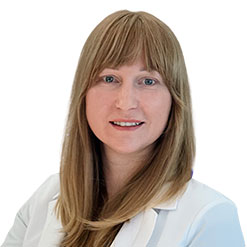
Obstetrician-gynecologist of the highest category, reproductive specialist. Main specialization: gynecological endocrinology — diagnosis and correction of conditions related to PCOS, premenstrual syndrome, ovarian-menstrual cycle disorders, endometriosis, correction of conditions related to different stages of menopause, ovarian cysts. Treatment of all forms of infertility and recurrent pregnancy loss.

Obstetrician-gynecologist, reproductive specialist. Main specialization: gynecology, infertility treatment, endocrine gynecology, pregnancy management (including pregnancy after IVF)
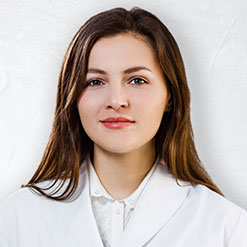
Obstetrician-gynecologist, reproductive specialist, ultrasound diagnostics expert. Main specialization: endocrine gynecology, management of high-risk pregnancies, diagnosis and treatment of all types of infertility, hysteroscopic treatment of uterine diseases