Table of contents
What is hatching and why is it important?
By the blastocyst stage, the embryo is surrounded by a shell called the zona pellucida (ZP). For successful implantation into the uterine cavity, the embryo needs to “hatch” from this shell—a process known as “hatching.” Under natural conditions, this occurs through the action of enzymes that dissolve the zona pellucida and the expansion of the blastocyst. However, this process can sometimes be disrupted, and in such cases, assisted hatching can help.
Who can benefit from laser-assisted hatching?
- Women of advanced reproductive age, as the egg shell becomes denser and less elastic with age.
- In cases of previous unsuccessful IVF attempts.
- When cultivating embryos with a thickened ZP (noted by the embryologist during the egg fertilization stage).
- When preparing embryos for preimplantation genetic testing (PGT-A) to rule out chromosomal abnormalities in the embryos.
- Women with elevated FSH levels (above 11-12 mIU/ml) or decreased AMH levels (below 1.1 ng/ml), where the shell may be denser.
- Women who smoked in the past, as this increases the likelihood of a hardened zona pellucida, requiring laser hatching.
- In cryocycles, as frozen embryos may develop a thickened shell due to freezing and thawing processes.
How does laser hatching work?
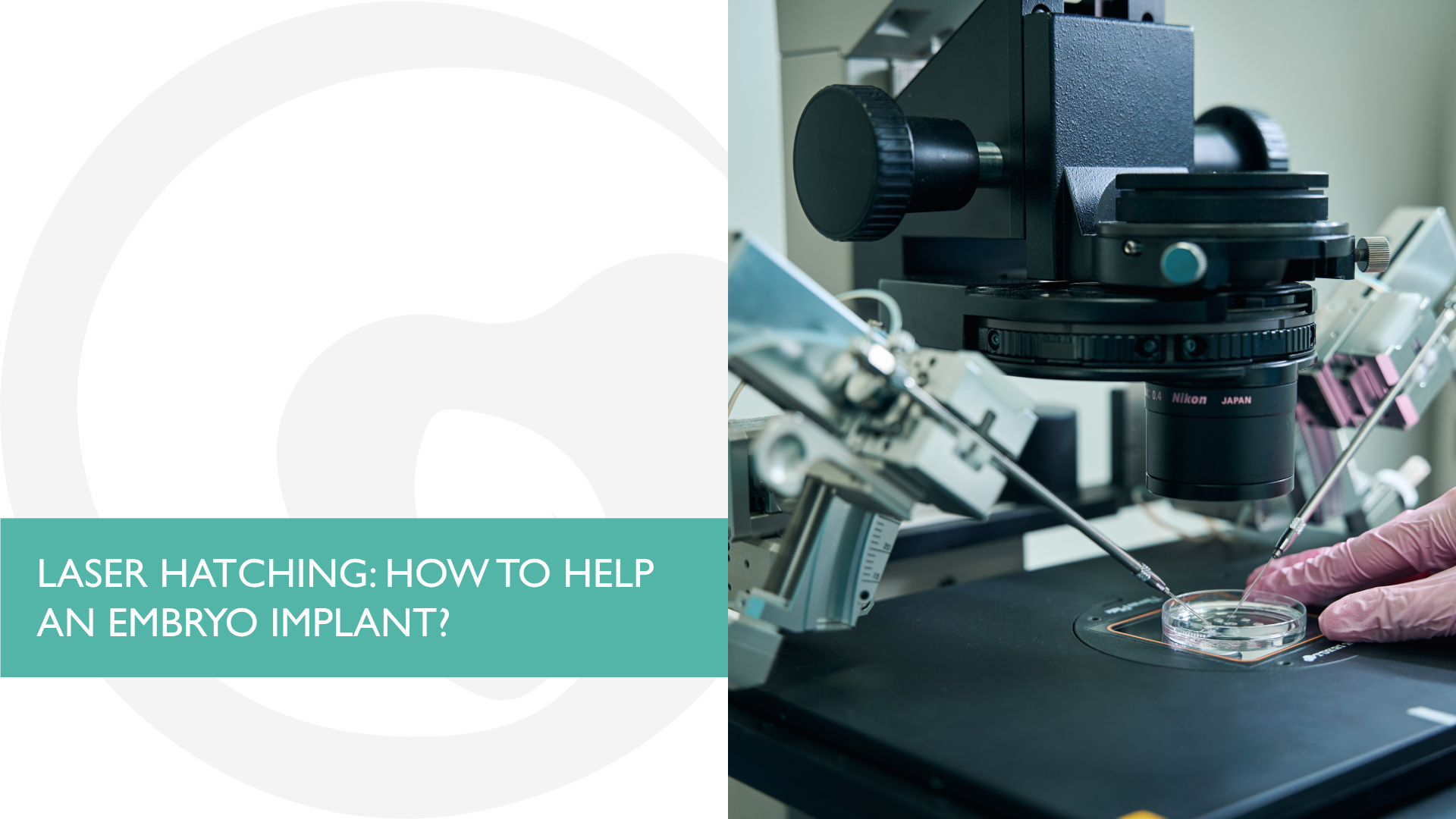
Laser technology creates a microscopic opening in the zona pellucida, helping the embryo escape from the shell and implant more easily into the endometrium. It also improves metabolic exchange between the embryo and the uterine environment.
What are the advantages?
Compared to mechanical and chemical hatching, laser hatching offers significant advantages and is considered the most effective method today:
- Non-contact method – minimizes mechanical damage to the embryo.
- Precision and speed – the procedure takes only a few seconds.
- Complete safety for the embryo – the laser wavelength is carefully selected to avoid DNA damage.
- Non-invasive method – unlike mechanical and chemical hatching techniques.
- Improves implantation chances – especially for women aged 35-37 and older.
When is laser hatching performed?
- On days 2-3 of embryo development – to prepare for partial hatching on days 5-6.
- Before trophoectoderm biopsy – to safely collect embryonic cells (trophoectoderm) for genetic analysis (PGT-A).
- Before embryo transfer – to facilitate implantation in complex cases.
What does science say about this?
Studies show that for women over 37 years old, laser hatching can increase implantation rates by 15-20%. In cryoprotocols, this method is believed to increase pregnancy rates by 10-15%. However, for younger patients without additional indications, its use may not always be necessary.
Conclusion:
Laser hatching is a modern technology that increases the chances of successful implantation and the birth of healthy children. If you’ve had unsuccessful IVF attempts or are preparing for genetic testing of your embryo, this method could be an essential step toward your dream of parenthood.
During consultations at the Reprolife clinic, we always choose the most effective path for our patients to achieve parenthood and deliver healthy babies.