
Table of contents
BREAST IN FOCUS
“I undergo annual breast ultrasounds. Everything is fine, so I don’t need mammography“, I sometimes hear from patients.
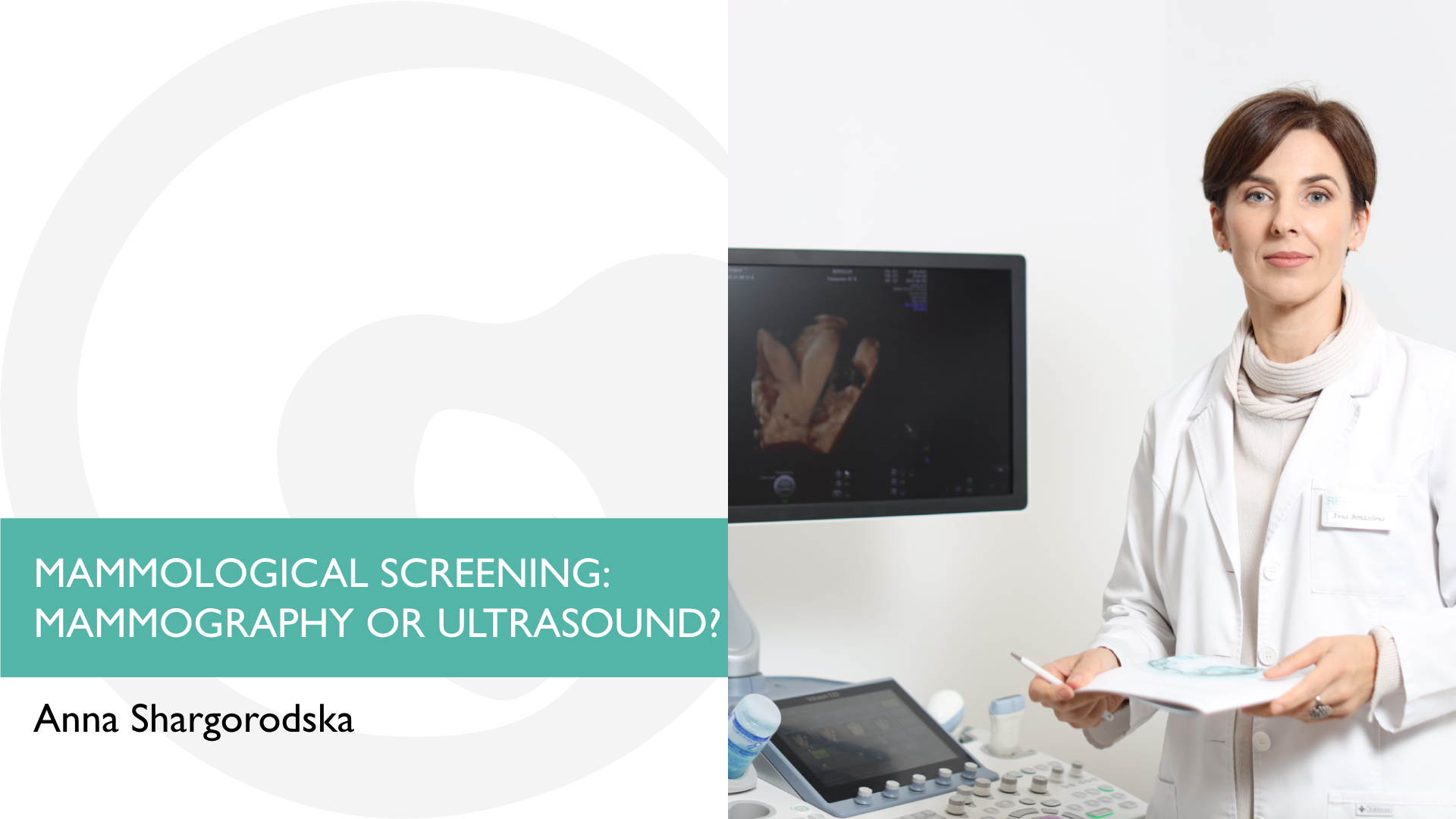
Is this opinion correct? Who should have breast ultrasound, who needs mammography, and what is breast screening?
Who Needs Breast Ultrasound and Who Needs Mammography?
Ultrasound (US) of the breasts is indeed a simple, accessible, high-quality, and safe diagnostic method. However, each method has its own advantages, disadvantages, indications, and limitations.
Breast Ultrasound
- Effectively examines liquid or solid masses (cysts and fibroadenomas), evaluates lymph nodes, and assesses blood flow in suspicious areas.
- Limited for large breast sizes and fatty breast tissue.
- No contraindications; it can be performed during pregnancy and breastfeeding.
Breast Mammography
- An X-ray mammogram is a generally simple and safe diagnostic method but requires specific equipment and setup.
- Modern digital mammograms are highly sensitive, emit low radiation, and feature a gentle compression system.
- Mammography provides a comprehensive view of the breasts, assists in accurate navigation for biopsy or surgical treatment, and detects microcalcifications (calcified tumor cell byproducts) that are invisible on ultrasound.
When should mammography be performed?
For young women without significant family or personal cancer risks, ultrasound is the optimal method for monitoring breast health. Mammography is generally not recommended for women under 35.
If suspicious areas or formations are detected, further examinations are required to establish a diagnosis and determine the best observation or treatment strategy. Regardless of age, your doctor may refer you for mammography, breast MRI, or a biopsy.
Screenings are conducted either for diagnostic or preventive purposes. Preventive screenings aim to detect disease at a preclinical stage when there are no symptoms. They should be performed regularly with prior result evaluation.
- Mammographic breast cancer screening typically begins at age 40 (or 35 in some countries), occurring every two years, and annually after age 50.
- Breast ultrasound may be used additionally to monitor benign formations.
Stressful lifestyles increase the risk of oncological diseases, including breast cancer. Unfortunately, Ukraine currently lacks a systematic breast cancer screening program for most women. However, anyone can undergo screening by consulting a family doctor or specialized centers offering mammograms.
If you are over 40 and regularly undergo breast ultrasounds with results labeled “BIRADS 1 or 2,” remember that ultrasound complements, but does not replace, mammography. Schedule a preventive mammogram as advised.
What Is the Best Screening Method for Breast Implants?
“I have breast implants. Should I only rely on MRI?”
A common misconception is that if breast implants are present, monitoring and screening should only involve MRI. This is not true. Both ultrasound and mammography remain accessible and informative screening methods for women with breast implants.
- MRI is recommended for high-density breasts or further diagnostics of detected abnormalities.
- It is also used if there are discrepancies between ultrasound and mammography results.
What Are the Indications for Breast MRI?
Indications for MRI breast screening include:
- Extremely high breast density (ACR C/D classification on mammography).
- Carriers of hereditary mutations linked to breast cancer (e.g., BRCA, CDH1, TP53) – high-risk group.
- Personal history of breast cancer diagnosed before age 50.
- Radiation therapy to the chest at a young age (e.g., for cancer treatment).
In these cases, MRI screening is recommended starting at age 25-30.
Raising Awareness and Prevention
Unfortunately, late-stage breast cancer diagnosis remains prevalent among women in Ukraine, reducing treatment success rates. This is attributed to insufficient awareness of regular breast screenings and a high incidence of endocrine disorders among women.
Breasts are hormone-sensitive organs, and maintaining endocrine health is a key factor in reducing the risk of breast neoplasms.
We urge women to:
- Take care of their health.
- Minimize the risk of breast neoplasms.
- Consult experienced gynecologists-
endocrinologists. - Regularly undergo breast screenings.
Promote this culture of self-care and preventive health among your loved ones.